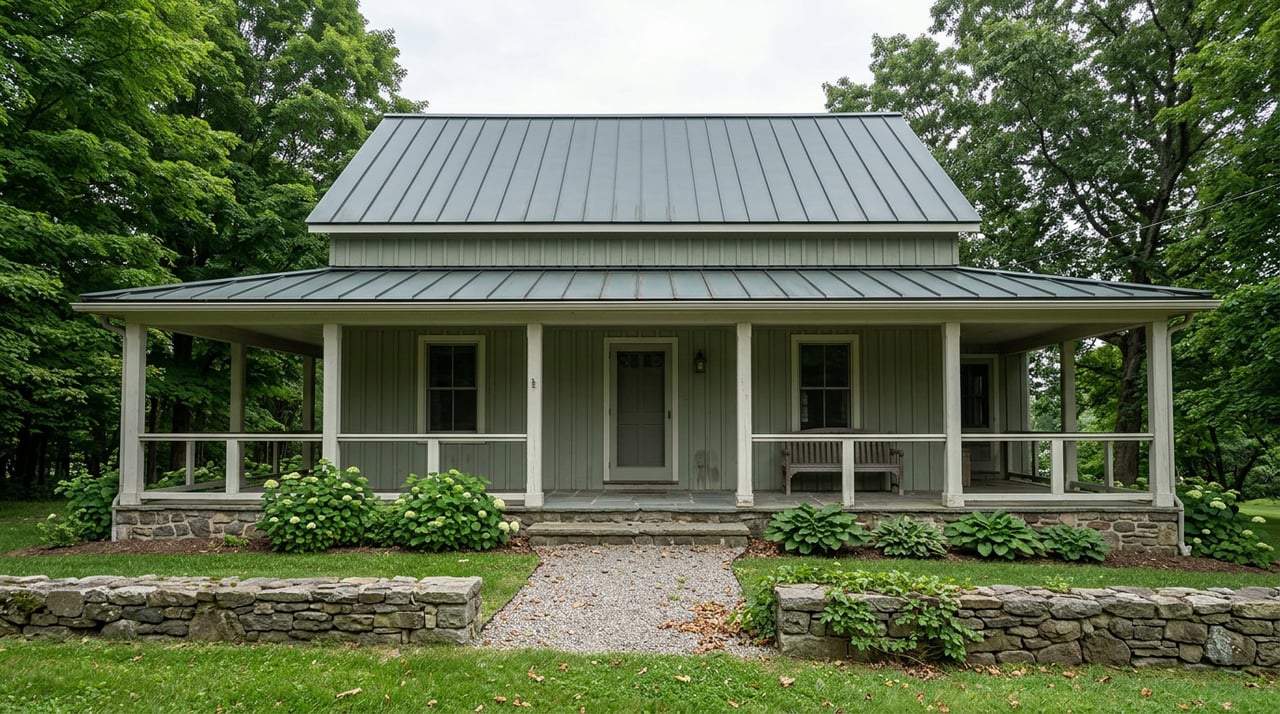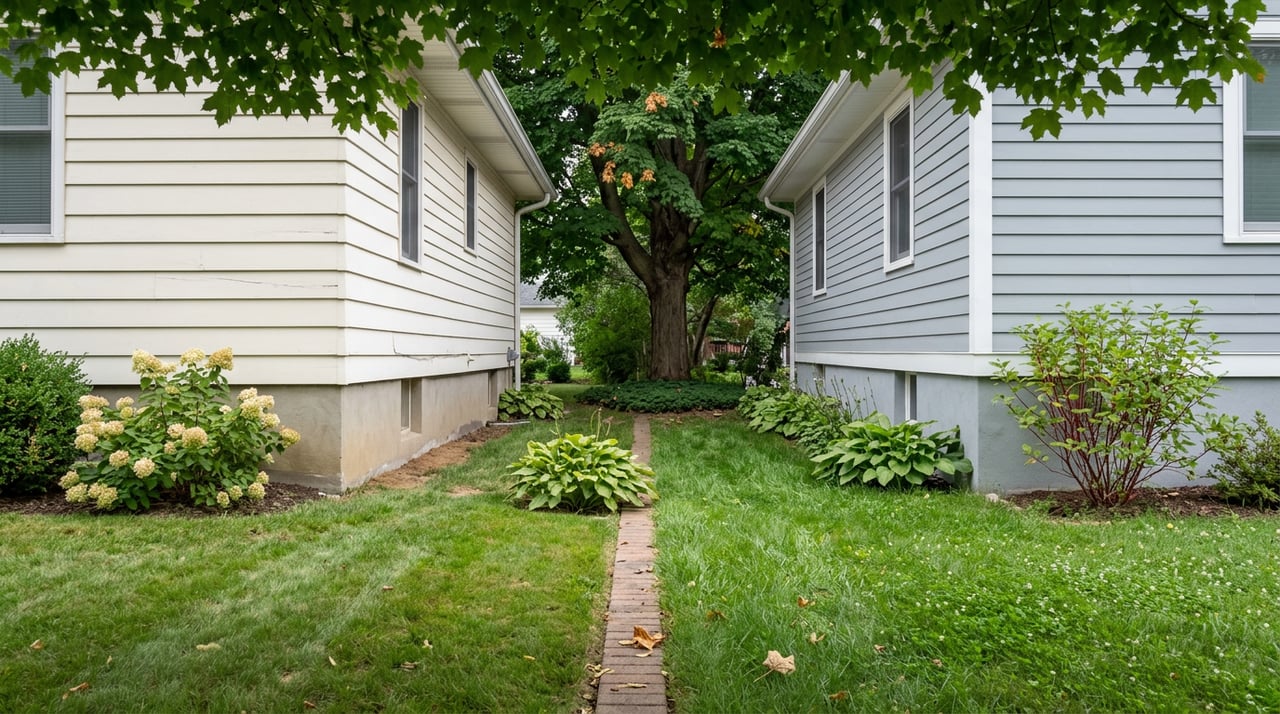
Two capes a block apart in the Village of Penn Yan can carry the same assessed value, the same lot size, the same school district, and still land on different village tax rates. Not because one owner appealed their assessment and the other didn't. Because the village line drawn by the state legislature in 1833 never followed a single town, and it still doesn't.
Most people shopping listings in "Penn Yan" assume the village is one taxing body with one rate. It isn't. The Village of Penn Yan sits across three towns at once: Milo, Benton, and a smaller piece of Jerusalem. Each town carries its own equalization rate, which means the same village budget gets apportioned differently depending on which town a given parcel happens to sit in. Buy on the Milo side and your village tax rate looks different than buying on the Benton side, even though both houses vote in the same village elections, get plowed by the same village crew, and show up under the same "Penn Yan, NY" address.
A village built without asking the towns first
The history explains why this feels backward. Penn Yan's first settlement grew up around the outlet of Keuka Lake without any regard for the surveyed line between Milo and Benton, because there was no incorporated village yet, just a crossroads. By the time residents petitioned the state legislature in 1833 to incorporate as their own village, so they could run a fire department and manage local improvements without asking the Town of Milo's permission first, the built-up area already straddled both towns. The legislature drew the village boundary around the settlement as it existed, not around a single town's border. A smaller slice of the Town of Jerusalem sits inside the village boundary as well, on the north end.
That accident of geography is why, more than 190 years later, the certified 2025-26 Village of Penn Yan budget still has to apportion its tax levy three separate ways.
What the same budget actually charges by town
The village's own adopted budget lays out the math. For the 2025-26 fiscal year, the total village tax levy was $3,894,516. Once you run that levy through each town's assessed value and equalization rate, the per-$1,000 rate lands in three different places:
| Town | Share of village levy | Apportioned rate per $1,000 |
|---|---|---|
| Milo | 86.91% | $13.96 |
| Benton | 10.01% | $16.49 |
| Jerusalem | 3.09% | $12.70 |
A homeowner on the Benton side of the line pays nearly 30% more per $1,000 of assessed value for the identical set of village services than a neighbor whose parcel happens to sit in Jerusalem. Most of the village's tax base sits in Milo, which is why Milo carries nearly 87 cents of every levy dollar even while its rate lands in the middle of the three.
The rates don't just differ, they move independently. When the village adopted its 2025-26 budget with a 5.99% levy increase, local reporting noted that Milo's rate went up while rates for Jerusalem and Benton actually dropped that same year. A buyer comparing two "identical" village listings a year apart could see their future tax trajectory move in opposite directions depending entirely on which side of an 1833 line the house sits.
The line just got renegotiated, with real money attached
If this sounds like historical trivia with no present-day stakes, the last eighteen months say otherwise. In January 2025, the Town of Milo rejected a petition from the Village of Penn Yan and the Finger Lakes Economic Development Center to annex about 72 acres of farmland at 2442 Old Route 14A, the former MacFetridge Farm, into the village for a mixed-use housing project. The rejection triggered two lawsuits and, eventually, an eminent domain proceeding by the town to seize the parcel outright rather than let it cross into the village.
By December 2025, Milo's board was telling residents the town had already spent more than $91,000 defending the case, with costs still climbing. At a packed town meeting in March 2026, one resident asked why the town had budgeted only $25,000 for legal fees given how much had already been spent. The town supervisor's answer: "We don't get sued often."
The dispute finally settled in June 2026. Both boards voted to split the property along a north-south line: roughly 36 acres on the western side annexed into the Village of Penn Yan, capped at 180 residential units and barred from retail use, and the remaining 36 acres staying in the Town of Milo for agricultural use, with the development agency setting aside $300,000 toward farmland-related projects in the town as part of the deal.
That settlement is the clearest proof available that the village-town boundary is not a filing cabinet curiosity. It is a line two governments were willing to spend real money defending, because which side of it a parcel sits on changes who taxes it, who zones it, and what gets built on it.
Why the rate you see today may not hold
There's a second layer to this that matters even more for anyone comparing sticker prices. The village's 2026-27 budget, adopted this spring, held its levy increase to 4.57%, just under the state's 4.58% cap, and officials estimated that would raise the average property tax bill by about $95. But that number only works because the village drew down roughly $363,343 in fund balance to plug the gap. Without that one-time transfer, village officials said the levy increase would have approached 13.9%.
Fund balance is a one-time tool. It can soften a single year's bill, but it can't replace revenue every year going forward. When a village leans on reserves to stay under a tax cap two years running, as Penn Yan's clerk-treasurer has acknowledged, the honest read is that the underlying cost pressure hasn't gone away, it's been postponed. A buyer comparing this year's tax bill on a Penn Yan listing to a neighboring town's flat rate is comparing a subsidized number to an unsubsidized one.
What this means before you make an offer
None of this is a reason to avoid the village. It's a reason to ask a more specific question than "what's the tax rate in Penn Yan?" The better question is which of the three towns a specific parcel sits in, what that town's apportioned rate has done over the last two budget cycles, and whether the village's use of fund balance suggests this year's number is the real number or a discounted one.
Yates County's assessment rolls list every parcel by town, and the village's adopted budgets are public documents that spell out the apportionment math parcel type by parcel type. For a house that already has an address inside "Penn Yan," that paperwork is worth five minutes before it's worth a closing.
A short FAQ
Does the town I'm in also change my school taxes? No. School taxes run through the Penn Yan Central School District boundary, which is separate from the village's internal town apportionment. The town line affects village tax rates, not the school levy.
How do I find out which town a specific Penn Yan address sits in? The Yates County assessment rolls list every parcel by town of record, and a local agent can pull that alongside the listing before you write an offer.
Is the annexed land near Old Route 14A likely to affect nearby home values? The settlement caps the newly annexed portion at 180 residential units and prohibits retail use, so it's worth understanding as a future neighbor to any property nearby, though its effect on specific home values isn't something this piece can predict.
If you're comparing a Penn Yan listing against something a few miles up the lake and want a straight answer on which town a parcel sits in before you fall for the porch, that's exactly the kind of homework Mary St. George does before you ever see the listing. Call Mary for a Lakefront Consultation.